|
|

 |
|
|
|
|
 |
New York Architecture Images-New York Architects Starrett & Van Vleck |
|||
| New York works; | ||||
|
|
|||
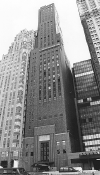
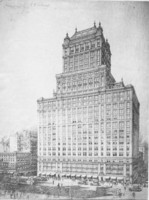
| 015 Royal globe Insurance Company | ||||
|
Starrett & Van Vleck was "preeminent in the country in
department store design since it set a new mark in originality of
department store design with the famous Lord & Taylor department store
in Fifth Avenue, New York City," in 1913, and had also designed the main
stores of Saks Fifth Avenue and Bloomingdales.
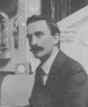
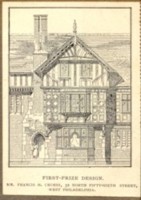
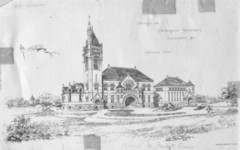
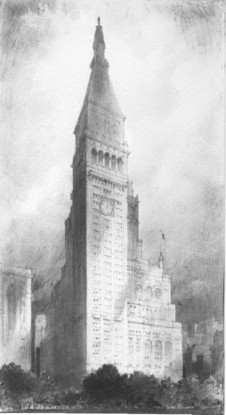
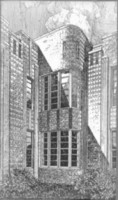
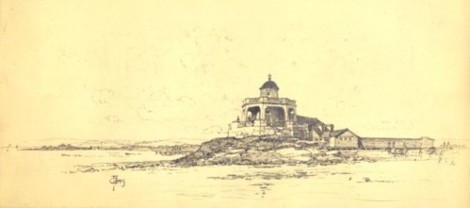
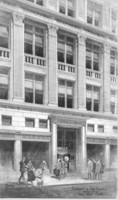
Francis Howse Cruess "My father, Francis Howse Cruess: a perfect English gentleman -- quiet, truthful, honest -- self-effacing, kind and loving, and with a content to be within himself, and not of the world. I am glad that I am his daughter." -- Helen R. Cruess Francis Howse Cruess, architect and watercolorist, was born Feb. 24, 1867 at No. 77 Dorset St., Hulme, Manchester, England, the son of a reporter and editor for the Manchester Guardian. Soon the family left Manchester for Whitehaven, Cumberland, where the father edited the Whitehaven Free Press and young Cruess was indentured to the architects Lewes, Banks & Townsend on Lowther Street. In 1881 the family moved again to Leamington, Warwickshire, where his father edited the Chronicle. Francis Cruess attended the Leamington School of Art and produced many impressive early sketches. Uprooted once again in 1887 to Colne, Lancashire, Francis was fascinated by the Roman coins and fosse he saw. He worked several years for Atkinson, Architect and Surveyor. Later he went to Leeds as a draftsman in terra cotta works. His watercolors and drawings depict many scenes in his native England. Cruess left England for New York City on Sept. 21, 1889 at age 22 and worked in Philadelphia for Yarnall & Goforth and Wilson & Co. Here he proudly noted the sale of a watercolor for $25 through the Pennsylvania Academy of Fine Arts. In 1893 he moved to Harrisburg, Pennsylvania to work for John C. Smith architects, who'd just been awarded a commission to design the new Lancaster Theological Seminary. The distinctive, graceful edifice Cruess created still stands, having survived a move to demolish it in the 1970's. In Harrisburg he met Bertha Connell, a Lancaster County native. They returned to Philadelphia and married, and he went to work for John T. Windrim architects. After his only child Helen was born, Cruess met Goldwin Starrett, of the prestigious New York City architects Starrett & Van Vlect, known for their designs of skyscrapers and department stores. Starrett persuaded him to move to New York, and so the family moved to 89 Pierpont St., Brooklyn, where Cruess became a U.S. citizen in 1905. He worked 25 years at Starrett & Van Vlect and lived in Rutherford, New Jersey 40 years. Few records survive regarding Mrs. Cruess. In 1947, Cruess alone moved to the home of her aunt and uncle, Sally and Amos Rutter, at 413 Charlotte St., Lancaster, not far from the seminary he designed. Soon after, Helen also moved there before her father died Dec. 31, 1948. He was 81. He is buried at Fairview Cemetery, Coatesville, Pennsylvania. Cruess' works have been shown posthumously at William Penn Memorial Museum, Harrisburg; Provident Bank, Philadelphia; and the Reading Public Museum, Reading, Pennsylvania. Architecture by Francis Howse CruessClick on images to enlarge 
 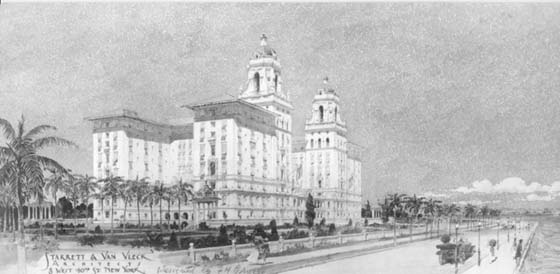 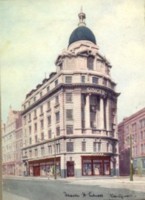
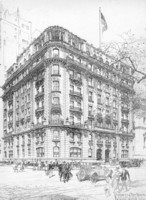
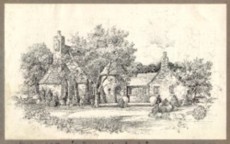 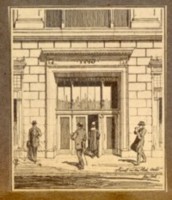
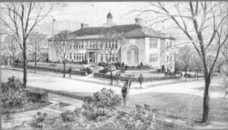
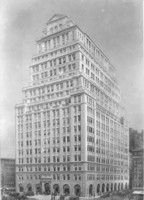 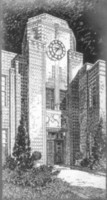
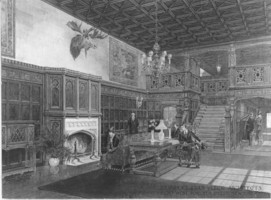
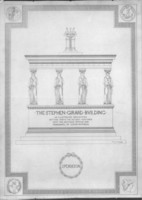 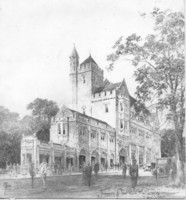
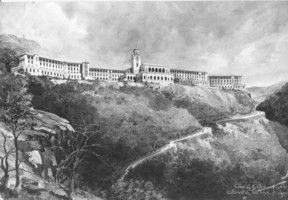
Special thanks to http://www.cruess.com
|
||||
|
links |
||||